• Skip to primary navigation
  • Skip to main content
  • Skip to primary sidebar

Head4Leadership HomepageHead4Leadership

Leadership and Neuroscience Coach

Email: dominique@head4leadership.co.uk
Call: 07703 564451

  • Home
  • About
    • Working with Head 4 Leadership
    • Knowledge and experience
    • Testimonials – What people say
  • Coaching Services
    • Heads Together – Leadership development workshops
  • Event speaker
  • News & blog
  • Contact

Workshop

5th August 2024

When influencing others isn’t working, ways to fix it.

The main feature of the latest newsletter

“Leadership is not about titles, positions or flowcharts.

It’s about one life influencing another” John C Maxwell

The main feature of my latest newsletter is one many of us have or will recognise. Leaders have leaders too, and as the case study shows it can be as hard managing up as a leader as it is as a contributor. See if this example transforms how you interact with others

Coach with Dominique

Are you a worrier? Or, may be you don’t worry enough?
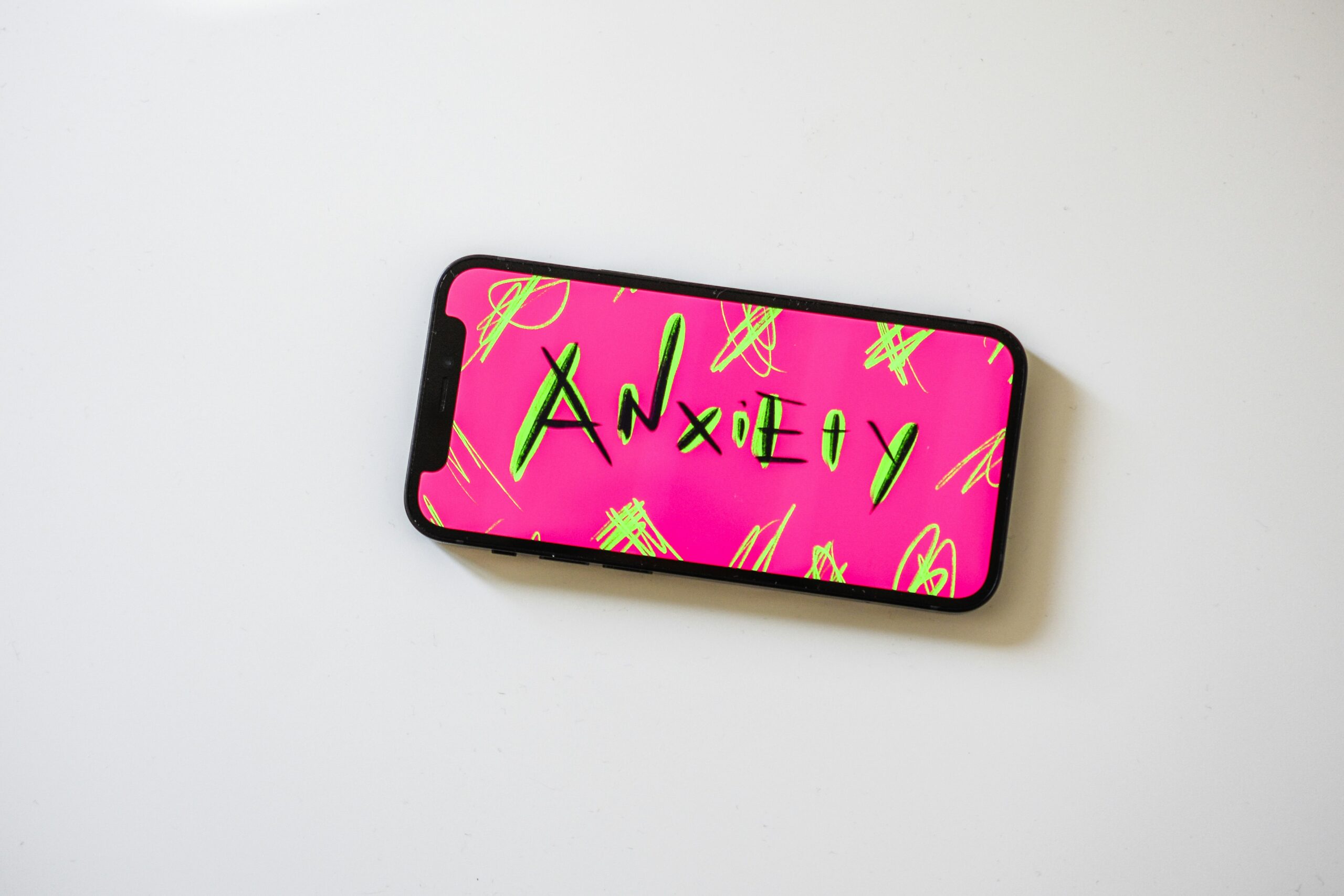
Picture – Nik / Unsplash

This section of the newsletter looks at worrying. Worrying is both positive and negative if out of balance. Included here are 4 tips test out if you find worrying is taking over. There are many more ideas you can draw on but this is the 4 tips section … 🙂

Subscribe to the newsletter

Be a more impactful leaders – Head 4 Leaderships other services

At Head4leadership I talk about coaching a lot and offer 4 services in that space. Also, I offer skills workshops that are also essential for leaders to explore and practice. Check out the link in the newsletter or on my website. They can increase motivation for activities and goals that are challenging. Collaboration in learning and being accountable and enhance perfromance.

Find out about skills workshops

Filed Under: Coaching, Head 4 Leadership, Leadership & Development, Workshop Tagged With: #Coaching, #Leadership, #managementdevelopment

14th June 2023

You say, feel or know you want to change, but are you really ready?

5 questions to help you find out.

When coaching and deliver workshops for leaders a main value is giving each individual time to actually focus on who they are, what matters and how motivated they are to put in the effort that change requires.

Coaching clients and workshop attendees can often come to sessions with mixed levels of intention or desire to change. How you ‘show up’ to coaching or development sessions and your readiness for change is going to make a huge difference to what you gain from them.

Here are 5 questions to enhance yourself awareness and identify if you are ready for a change challenge?

  1. What has been your relationship with change? What is your change history?  Work and personally. What have been your change successes and achievements?  What have been the failures or misses you have experienced? How would you rate your ability to set and stick to your change goals?
  2. Are you at the ‘pondering’ stage or the ‘ready to do something’ stage? Make a list of the pro’s and con’s for making this change.  Until you have more pro’s than cons you are more likely to be in a stage of contemplation.  More pro’s means than you are ready to identify actions and to act on them.
  3. What’s your reason for making this change? Clients often don’t have a solid enough reason for why a change really matters to them personally.  A way to identify how important a change is to you, is by understanding your values, strengths, what you stand for and what is significant for you.  A change that supports these is one that is driven by YOU and that feeds YOUR motivations to act.
  4. How good are you at having goals and committing to them? Are you someone who prefers to self motivate or someone who does better when there is support and accountability to others?  Self motivated people will have a really strong ‘why’ and ‘purpose’ that keeps them going.  For those that sustain their motivation better with the support of others, having a coach or trusted peer in place will play a big part in enabling focus and providing encouragement to achieve the goal.
  5. Does your mindset for change help or hinder you?  Positivity toward change plays a big part in a person’s belief that they can make the change happen.  Thoughts and mind-talk, if negative, can quickly demotivate.  It impacts teams too.  A group’s mindset can swing from positive to negative or back again based on the how they or a particular individual voice their views and opinions.  As a coach I test the truth of mind-talk, help to re-frame negativity to find the learning and opportunity, so as to re-open the mind to keep striving.

Change isn’t easy, with the right preparation and support you can be both ready and successful in making positive changes happen.  

Contact Head4Leadership for a free 30 minute consultation

Filed Under: Coaching, Leadership & Development, Workshop Tagged With: #Coaching, #Leadership

9th February 2022

Getting to the heart of what’s on your mind

Including a case study using Dr David Rock’s SCARF Model

A recent coaching session and my client (let’s call him Jim), turns up (on zoom) in a less than positive mood.  His body language is the first clue.  He wasn’t as ready as usual to engage. Eye contact was fleeting, and his stance was slouched and lacking energy.  After the usual pleasantries, I was keen to hear what has been happening and how things have progressed. I adjusted my energy level, tone and enquiry to match what I was sensing, that something was bothering him.  

Noticing body language

Jim thought I hadn’t noticed his mood and was surprised I had picked this up so quickly.  We humans do this all the time. We sense and draw conclusions.  Some are better at it than others, some are wise enough to what they are sensing; and some have little awareness of their own state, let alone that of another!

The situation – a team restructure

Jim is a senior manager, with structural changes in his team on the Exec’s. agenda.  His is not the only team being reviewed, though it has come as a surprise as the team and company have performed well.  He was waiting for the Exec. to respond to the ideas he and his team have put forward.  It might appear obvious what was bothering Jim, but some deeper exploration helped to reveal more specifics.  So, we examined the situation in terms of the SCARF model.

S.C.A.R.F. a model from Dr David Rock

Reach New Heights

The model is based on brain imaging results. These showed direct brain activity of threat (through the release of adrenaline and cortisol); or reward, (when dopamine, oxytocin or serotonin are released) in relation to these five SCARF areas.

The SCARF model in action – a case study

When in limbo

As Jim waited for the decision, an assessment of the SCARF model revealed he felt his Status (how he is valued) was at risk.  Thoughts around, what if his ideas were not given credence? How would that make him look to the Exec and his team?

Certainty was one of the big issues for Jim during the waiting period. This is because your brain stimulates strong alarm signals (fight or flight symptoms) when unsure. 

Jim felt that Autonomy was also feeling jeopardised as the decision was now out of his hands, he had minimal control. 

Jim described the Relatedness area as wavering as he had good relationships with most of the Exec. It could change depending on how they handle the messaging of the decision.  If done badly or thoughtlessly, even the ‘best’ decision could cause the Relatedness area to be bruised for some time. 

As for Fairness, Jim was pleased to have been listened to so far.

Getting the desired outcome

By putting a situation that generates feelings such as, comfort, joy or happiness into the SCARF model, it can show how the situation is having non damaging or boosting effects across the five SCARF areas.

If Jim’s ideas are taken on by the Exec, he said he would feel that his Status (how he is valued by others), will be in a good place, maybe enhanced even. 

His sense of Certainty (uncertainty is one of the brains biggest ‘threat’ stimulators), would be clearer and this would be a relief.

His level of Autonomy (the amount of control in the situation) would be in a better place, so focus and direction could be worked on.

Because you and I are ‘wired’ to sense if others are a friend or a foe, Relatedness with the decision makers according to Jim, would be stable.  How the decision was made, with his team’s views being considered also sat well within Jim’s Fairness assessment.  

What if it doesn’t go his way?

Jim’s reaction, messaging and behaviour, will impact his Status with others.  Jim has ‘Autonomy’ over his behaviour and reactions. Yet, how can he keep the Relatedness area in a positive place with his team?

We explored several potential decisions and how his team member’s own SCARFs may be impacted. This allowed for exploration into shifting a person from a ‘threat’ response (e.g. blame, anger, defensiveness) to one that finds opportunities.  Jim gained confidence and courage through this preparation for the more difficult outcome, should that be the result. This confidence fed positively into his Autonomy needs.

The Headstrong Coaching Programme

The SCARF model is one of the tools referenced in my ‘Headstrong’ Coaching programme.   To find out more about this programme, as an individual or as part of management development for your business, email: dominique@reachnewheights.co.uk or click here for more information

Filed Under: Coaching, DS Consulting, Leadership & Development, Neuroscience, Resiliance, Workshop Tagged With: #courage #HR #managementdevelopment #leadershipdevelopment #changemanagement, #neuroscience #coaching #confidence, Resilience

25th November 2021

Why management development matters?

How would you reply?

I was recently asked to contribute to an article on this subject and was delighted to have my contribution published in digit’s blog. https://www.digits.co.uk/lms/the-importance-of-management-training/

Here’s my perspective

Management training with the right content provides a vital opportunity to nurture, sustain and develop an organisation’s culture. It matters because leading and managing others can be tough. It requires many challenging conversations and decisions. That means, to handle these well, being able to think clearly, logically, and compassionately when under pressure. After all, who thrives under a stressed manager? No one!

What can management training help with?

What can management training help with? Communicating your team’s work and direction, ways to enable your team to bond and support each other, how to give each member your individual attention, and feedback. Then there’s the other stuff – reporting, strategising, analysing information, networking and keeping up to date with your industry. Often management training involves processes and policies too. These are all important yet it’s ‘how’ the ideas in training are applied that makes the difference. This requires emotional awareness and intelligence.

It’s all about the ‘how’

In my experience, the ‘how’ sets the tone for an organisation’s culture. A style that triggers fear or overwhelm encourages errors and absence. There is much neuroscience that can be applied to leading. What creates fear or threat? How to create psychological safety and creativity. These, along with skills such as listening to understand and personal awareness with psychometrics, aid the positive impact a leader has on others.

Let’s not forget the phrase ‘behaviour breeds behaviour’! Management development and coaching can create leaders that we’d want others to copy, and healthy and inspiring cultures

Want to collaborate?

I’d like to hear your thoughts too! And if you’d like to discuss the impact your management development is having on your culture, get in touch Dominique@reachnewheights.co.uk

Filed Under: Coaching, DS Consulting, Leadership & Development, Neuroscience, Workshop

20th June 2019

Facilitating a session of reflective thoughts on professional success and vulnerability with a group of nutritionists.

Early in June I was delighted to be invited to give a talk to The British Association for Nutrition and Lifestyle Medicine (BANT). It was their annual lunch, volunteer celebration event and prize giving held at Café Spice Namasté in London.

I was asked to run an engaging session, to last 90 minutes, and which would be eligible for CPD hours and which included my neuroscience focus on resilience and mental strength. The audience size was 50, so one might default to more of a lecture style of presentation. But I wanted this group of nutritional therapists to get some meaningful benefit from our time together.

I asked two questions ahead of the event:

  • What part(s) of being a nutritional therapist could test your resilience; and
  • To think about a time doing the job, when you have felt at your most mentally strong and most mentally vulnerable.

I understood that the people in the room were like me, insofar as their clients were people seeking their expertise and help. I wanted to give the group the opportunity to consider their personal experiences, to ‘voice their thinking’ and connect with their thoughts. I put together a workbook to facilitate thought and discussion and to create a physical memory, key to the generation of new neuropathways, to take away from doing the activity.

The session in practice

People were sat together in groups of four and first discussed in pairs a challenge each had faced during their life. They were asked to outline the challenge, what needed to be done, what actions took place and the resultant outcomes. Those sat together did not always know each other well, so I did need people to trust each other to share some emotional thoughts.

Interestingly, what became apparent (as I had hoped) was that vulnerabilities and successes when thinking in a professional practice context were similar for each of the people in the groups. Many though had never shared these thoughts with the professional colleagues they sat with. Once people appreciate that they have a shared relevant experience e.g. anxiety, they are willing to share coping/management strategies and support for each other.

There was a good buzz as I walked among the tables and as with any group work some were more open with their thoughts than others. The session was a really good ‘stretch’ exercise for me too in terms of audience management. I needed to be assertive enough to keep the event on time, but not so forthright as to lose the momentum of the discussions. While one is always learning, I’m pretty pleased with how it went, and over lunch there were supplementary questions and positive comments from those taking part.

If you are in a professional association and responsible for organising a group meeting, Dominique has a portfolio of presentations and workshops about leadership and management from over 20 years of experience. Supplementing this is with her understanding of neuro-coaching and neuroscience to facilitate mental resilience that enables people to improve performance in pressure situations.  

Filed Under: Workshop

Primary Sidebar

Categories

  • Client Testimonials
  • CMPP
  • Coaching
  • DS Consulting
  • Head 4 Leadership
  • Leadership & Development
  • My news
  • Neuroscience
  • Reflections
  • Resiliance
  • Resilience
  • Special Offer
  • Workshop
  • Your career

Archives

  • May 2025
  • March 2025
  • February 2025
  • November 2024
  • September 2024
  • August 2024
  • June 2024
  • May 2024
  • March 2024
  • January 2024
  • October 2023
  • August 2023
  • July 2023
  • June 2023
  • May 2023
  • March 2023
  • February 2023
  • November 2022
  • August 2022
  • July 2022
  • April 2022
  • February 2022
  • December 2021
  • November 2021
  • October 2021
  • August 2021
  • June 2021
  • May 2021
  • April 2021
  • March 2021
  • February 2021
  • December 2020
  • November 2020
  • October 2020
  • September 2020
  • May 2020
  • April 2020
  • March 2020
  • February 2020
  • January 2020
  • December 2019
  • October 2019
  • September 2019
  • August 2019
  • June 2019

Follow ​Dominique

  • E-mail
  • Facebook
  • Instagram
  • LinkedIn
  • Phone
  • Twitter
  • Home
  • About
  • Coaching Services
  • Event speaker
  • News & blog
  • Contact

© Head4Leadership–2025