• Skip to primary navigation
  • Skip to main content
  • Skip to primary sidebar

Head4Leadership HomepageHead4Leadership

Leadership and Neuroscience Coach

Email: dominique@head4leadership.co.uk
Call: 07703 564451

  • Home
  • About
    • Working with Head 4 Leadership
    • Knowledge and experience
    • Testimonials – What people say
  • Coaching Services
    • Heads Together – Leadership development workshops
  • Event speaker
  • News & blog
  • Contact

Resiliance

22nd August 2023

Making failing productive and the leadership skill of giving feedback

When organisations say they value failing, do they really mean it? 

Many of my coaching clients have stated that failing is ok, yet most of the time failure and the act of trying is not recognised, talked about or readily admitted.  In some instances there can even be reprisals.

So how can you create the psychologically safe environments, that allow you and others to truly learn and innovate from failing?

Photo by 傅甬 华 on Unsplash

Failing – the real and imagined impact.

As humans that have genetics that drive us to live and work in social groups for safety and progress, how you are ‘seen’ by the group members matters greatly.  Actual and perceived failures can influence you and others, to alter your value to them.  Your value to an individual or group can change daily.  It can increase, stay as is, or lower, based on how others assess your actions.  Trying out something new has a ‘risk’ to it and we all have differing tolerance levels for risk.

The two sides to how you are ‘seen’. 

It’s not all bad, whilst failing can have a negative impact, many will see the courage in your having a go and risking shortcomings.  Especially if you have not been overly reckless in doing so. Several will see the mettle of how you use that failing to improve and keep going.  The story of the failure and the learnings revealed can be a great inspiration for a multiple of reasons.

Failure, our manure for success!

When I ran a global leadership programme that explored being entrepreneurial, we shared many stories. The stories of efforts that had not been entirely successful generated slogans, one being ‘failure is our manure for future success’.   A graphical description of the positive results from trying even when missing the mark is an outcome.

Positive mental attitude

Dealing with the result of your failed efforts can be linked to your mental resilience.  Most of us are familiar with feelings such as; embarrassment, shame and guilt.  Your resilience levels at any given time (because they change), will have a bearing on how you deal with those emotions. 

In times of high mental strength you are likely to be motivate, persistent and driven to make adjustments and try again. Determination allows you to accept the discomfort of things not going your way, and steer you to seek improvements.  A positive mental attitude! On other occasions, when resilience is lowered the resulting response can be to blame others, to withdraw, to not want to try again.  

It’s not just those that try out new ideas that need this mindset, those that ‘judge’ them that have this mindset too are key to creating the environments that nurture creativity and innovation.

Click and enquire into measuring and building resilience

Failing productively

Failures are productive when you gain new and useful knowledge that you couldn’t have gained if the ‘experiment’ had not taken place. The successful, do not often get there with out failings.

Walt Disney, was let go from a newspaper for lacking imagination of all things! He had several failed businesses. All of which gave him knowledge and experience that led to him creating his legendary characters and theme parks. 

A recent pod cast, It’s OK to Fail, but You Have to Do It Right – YouTube discussed failing and these pointers caught my attention.

What’s the difference between failure and a mistake?

Amy Edmondson of Harvard Business school describes the differences in terms of:

Failures coming from:

  • smart experimentation,
  • that has a clear goal,
  • where the homework and research has been done, 
  • where risk has been properly assessed

Mistakes, on the other hand, happen when there is deviation from a known practice or set of rules. 

A mistake occurs when these are not followed or given enough attention. Such as, leaving your computer unlocked, unattended and with confidential information easily available.

How to generate imperfection tolerance and thrive?

It is context driven.  An example in the podcast was the airline industry.  The tolerance for failure, rightly, is low.  Failure happens in the simulator.  Training takes place in safe settings.  Failures are addressed, admitted and talked about openly.  As the context changes, so can the failure tolerance levels.

In the military, talking about failures in a non-personal fashion with context and analytics at the centre, gets to the best understanding and is common practice.  How a person responds to the feedback in these debriefs has more impact on how they are ‘seen’ than the failure or mistake itself.

Applying failure tolerance

Providing space to experiment requires ‘some’ formality, process and guidelines, relevant to the context and what is being tested.  It is especially important to include a de-brief that captures the successes and necessary learnings for the future.

Feedback and feedback skills are key.

Photo by charlesdeluvio on Unsplash

Firstly, the back and forth of feedback is easier for all parties if it is part of regular practice.  Regular is not bi-annually.  Regular is at least monthly with context and data.  The environment and practice of feedback can create psychological safety.

There is much to consider with feedback skills. For both parties’ personal emotional management goes along way to being able to accept and work with feedback.

Skills for a giving feedback

  • Clarity on why this feedback is needed and valid
  • Data, context and details that can be checked if not observed in person
  • What really matters and needs attention
  • How the message is to be given – facts, data, style, method, acknowledging feelings
  • Who gives the feedback – what is your relationship, how much trust is there, does trust and connection need work?  Because of the situation is there someone better placed to provide feedback
  • Readiness to listen, be challenged, to gain other insights and manage emotional responses from the receiver
Want to improve your feedback skills?

Enquiring is free, its low risk too!

Filed Under: Head 4 Leadership, Leadership & Development, Resiliance Tagged With: #Coaching, #creativity, #feedback, #innovation, #Leadership, #postivemindset, Resilience

20th June 2023

Ever had a business identity crisis?

Mine’s over. Introducing my new business name ‘Head 4 Leadership’

What was wrong?

About 6 months ago,  I was becoming more conscious of the incongruences between what I do and how others understand this. Social media had different headings, and my initial name – DS Consulting – reach new heights, began to not sit right with me.  It described an outcome, not what I do!

I sent an email to my marketing guy, subject – Identity crisis!

Evolution prompts change

I have been running my business for nearly 9 years now. Those that know me, can find me and get what I do – leadership and neuroscience coaching. 

At the begining I was known for Leadership Coaching. I have continued to progressed and build my qualifications, as we all do or can do in our careers. Neuroscience qualifications have been added over the last 6 years. This increases what I offer in knowledge and experience.  Deeper understanding for why you think and feel like you do; to help you manage your neuroscience insights appropriately and developed them.

The evolution of my leadership work with neuroscience meant that a year ago I updated my logo (the same logo you see today).  Since then, I knew I need to be a bit more ‘Ronseal’ and have a name that ‘does what it says on the tin’.  Here’s why I am now trading as Head 4 Leadership.

(Only got my old contact details – no matter, you’ll be redirected!)

Being more ‘Ronseal’

Head 4 Leadership links up three concepts for what I do and what matters. 

  • Head 4 is directional, forward thinking and links to coaching that takes you from where you are, towards where you want to go. 
  • Head 4 also links to self management and the resilience needed for leading people, self and situations.  All of which can trigger moments of expected and unexpected personal challenges that require you to be HeadStrong.
  • Leadership is my passion, it’s a privilege. Doing it well, provides environments that are safe and thriving. This matters to me and those I aim to work with.
Thinking to work with me? – Contact H 4 L

The mission of Head 4 Leadership

My mission had become clearer and that too prompted a need to change.

‘To influence leadership cultures to demonstrate courage and compassion’

Managing pressure, staying ‘clear thinking‘ and ‘keeping your head’ are all skills that enable just that.  You’ll weigh up risks, make tough decisions and do what’s needed with calmness and empathy.

My thank you’s and gratitude go to this great set of people

  • For being there being there to help my thinking, aligning my social media and project managing the change – Nick Shrimpton from Sixthsense Marketing
  • For adapting my logo – @Tamsin Bell from Tamsin Rose Designs
  • For updating my website – @David Woodroffe from The creative design studio
  • For the sorting of the domain and email changeover – @Peter Bishop from Tek Solutions Ltd

This collaboration now means you can find me and connect with me, more easily.

  • Facebook
  • LinkedIn
  • Instagram
  • Twitter
  • Mail
Thinking to work with me? Contact H 4 L

Filed Under: Coaching, Head 4 Leadership, Leadership & Development, My news, Neuroscience, Resiliance Tagged With: #Coaching, #Leadership, Resilience

9th February 2022

Getting to the heart of what’s on your mind

Including a case study using Dr David Rock’s SCARF Model

A recent coaching session and my client (let’s call him Jim), turns up (on zoom) in a less than positive mood.  His body language is the first clue.  He wasn’t as ready as usual to engage. Eye contact was fleeting, and his stance was slouched and lacking energy.  After the usual pleasantries, I was keen to hear what has been happening and how things have progressed. I adjusted my energy level, tone and enquiry to match what I was sensing, that something was bothering him.  

Noticing body language

Jim thought I hadn’t noticed his mood and was surprised I had picked this up so quickly.  We humans do this all the time. We sense and draw conclusions.  Some are better at it than others, some are wise enough to what they are sensing; and some have little awareness of their own state, let alone that of another!

The situation – a team restructure

Jim is a senior manager, with structural changes in his team on the Exec’s. agenda.  His is not the only team being reviewed, though it has come as a surprise as the team and company have performed well.  He was waiting for the Exec. to respond to the ideas he and his team have put forward.  It might appear obvious what was bothering Jim, but some deeper exploration helped to reveal more specifics.  So, we examined the situation in terms of the SCARF model.

S.C.A.R.F. a model from Dr David Rock

Reach New Heights

The model is based on brain imaging results. These showed direct brain activity of threat (through the release of adrenaline and cortisol); or reward, (when dopamine, oxytocin or serotonin are released) in relation to these five SCARF areas.

The SCARF model in action – a case study

When in limbo

As Jim waited for the decision, an assessment of the SCARF model revealed he felt his Status (how he is valued) was at risk.  Thoughts around, what if his ideas were not given credence? How would that make him look to the Exec and his team?

Certainty was one of the big issues for Jim during the waiting period. This is because your brain stimulates strong alarm signals (fight or flight symptoms) when unsure. 

Jim felt that Autonomy was also feeling jeopardised as the decision was now out of his hands, he had minimal control. 

Jim described the Relatedness area as wavering as he had good relationships with most of the Exec. It could change depending on how they handle the messaging of the decision.  If done badly or thoughtlessly, even the ‘best’ decision could cause the Relatedness area to be bruised for some time. 

As for Fairness, Jim was pleased to have been listened to so far.

Getting the desired outcome

By putting a situation that generates feelings such as, comfort, joy or happiness into the SCARF model, it can show how the situation is having non damaging or boosting effects across the five SCARF areas.

If Jim’s ideas are taken on by the Exec, he said he would feel that his Status (how he is valued by others), will be in a good place, maybe enhanced even. 

His sense of Certainty (uncertainty is one of the brains biggest ‘threat’ stimulators), would be clearer and this would be a relief.

His level of Autonomy (the amount of control in the situation) would be in a better place, so focus and direction could be worked on.

Because you and I are ‘wired’ to sense if others are a friend or a foe, Relatedness with the decision makers according to Jim, would be stable.  How the decision was made, with his team’s views being considered also sat well within Jim’s Fairness assessment.  

What if it doesn’t go his way?

Jim’s reaction, messaging and behaviour, will impact his Status with others.  Jim has ‘Autonomy’ over his behaviour and reactions. Yet, how can he keep the Relatedness area in a positive place with his team?

We explored several potential decisions and how his team member’s own SCARFs may be impacted. This allowed for exploration into shifting a person from a ‘threat’ response (e.g. blame, anger, defensiveness) to one that finds opportunities.  Jim gained confidence and courage through this preparation for the more difficult outcome, should that be the result. This confidence fed positively into his Autonomy needs.

The Headstrong Coaching Programme

The SCARF model is one of the tools referenced in my ‘Headstrong’ Coaching programme.   To find out more about this programme, as an individual or as part of management development for your business, email: dominique@reachnewheights.co.uk or click here for more information

Filed Under: Coaching, DS Consulting, Leadership & Development, Neuroscience, Resiliance, Workshop Tagged With: #courage #HR #managementdevelopment #leadershipdevelopment #changemanagement, #neuroscience #coaching #confidence, Resilience

8th December 2021

How Can Leaders Cut Down Workplace Loneliness? Read on.

Loneliness is not seasonal but often highlighted at this ‘Merry’ time of year.

In many parts of the world Christmas time is a set of days when there is a bombardment of festivity.  A period where expectations are raised.  A month with pressure to be joyful.  A chapter when bereavement and loss are reawakened.  And, in 2021 a time with pandemic uncertainty continuing to impact how we spend our time.

Defining loneliness

It can be hard to explain, some researchers define loneliness as perceived social isolation, a feeling of being unconnected from or not connected at all to the social contacts we desire.  From a neuroscience perspective, we are wired to survive through human connection.  Survival has been achieved through social group connections – we are stronger together!

This matters as it has been shown in Studies that a prolonged sense of isolation (triggering stress hormones and chemicals) will impact health and wellbeing, maybe more seriously than drinking or smoking.

Some stats on loneliness

This chart (sourced from The Jo Cox foundation) shows stats from 2017, naturally not including the impact of Covid.  These stats plus Covid restrictions, make it even more likely that someone in your team or organisation have, are or will experience periods of loneliness; and Christmas time is known to exacerbate this.

According to the data below, if your workplace includes: 17–25-year-olds, anyone with a disability, a parent or carer there is a high probability that quite a few of them may feel lonely.  I think I can safely assume that other personal situations (e.g. age, gender, race, addiction) that have not been mentioned can also contribute to these feelings.

What’s the impact of loneliness for business?

Monetise the following and the cost to business becomes clear.  Isolation or a sense of it causes withdrawal from a group or organisation.  This tactic is a protection strategy from further rejection.  A sense of disconnection leads to reduced commitment, innovation and collaboration.  Through feelings of not being connected to or being cared about by others, the work suffers in both its quality and volume.  The energy and distress that comes with ongoing loneliness also leads to absence and errors.

A personal loneliness experience

I have certainly had painful moments of loneliness. One of my moments came from the break-up of a business and partnership.  For years I carried a lot of guilt and shame about the business loss and betrayal from the partnership aspect.  I ‘felt’ I had no one to turn to, I did not want to share the failure and potential judgement with friends or colleagues.  Family was impacted and seemed too close, so I ‘believed’.  For many years, despite battling on and getting through, I still ‘felt’ different, stupid for letting this happen and embarrassed.  My confidence in my judgement of situations and people was hit badly.  It took the work I do now (a career change of decades) to help me make proper use of that experience and what I could learn from it.

How leaders can identify loneliness and act to reduce it

Building psychological safety is a big part, that generates safe spaces for sharing.  How can this be achieved?  It takes time, you need to:

  1. Get to know your team as individuals, discuss (yes, talk!) about each other’s experience, successes, challenges, past failures.  Listen to and share family situations and the pressures or joys that may be present there.  Acknowledge birthdays or special events. Doing this regularly through one to ones helps make vulnerability acceptable and builds trust.
  2. Get the team to know the team, similar to above, build a habit of sharing thoughts and feelings in a respectful way.  Teams that know each other can help spot when somethings different and raise it appropriately, rather than it going unnoticed.

Questions to aid identifying loneliness and help find a way forward.

In a perfect world…

  1. How could the working environment be improved for you? This question can highlight how office layout, home working, working hours or geography for example, is impacting a person.
  2. What ways of working in this team would keep or increase your motivation? For example, the reward mechanisms of a team can make a difference (commission structures, can shift healthy competition to underhand behaviour), how you communicate, protocols and processes, vision and goal clarity.
  3. What would change to really help you thrive in this role/team? This question opens the door to how people behave, the culture, the norms, what this person values.
  4. What can I do to be even more helpful to you? A question that recognises a leader’s role in shaping a team and treating each person as an individual that is cared about. 

Are you lonely? Have you tried these?

If you are lonely, this link gives nine ideas to experiment with,  especially as, if you do nothing differently, nothing or little is going to change.

What about Christmas time?

And lets include other festive occasions, if working from home remains or someone is away a lot?

I asked some valued connections and based on having done the ground work of building trust a few ideas came through:

  • Enquire into when people get lonely and if that occurs, how you can help?
  • Let people know you are there and can be contacted even outside of ‘office hours’.
  • Have some organisations (these may help) to hand that people can reach out to, they may prefer that.
  • Invite people to meet up socially (in person or virtually) and if they say ‘no’, gently double check that is really what they meant (it can be hard to say ‘yes’ sometimes). It shows you are making a genuine offer.

How I can help

Why not enquire about My ‘Head Strong’ Coaching Programme? It provides a leadership experience enhanced with brain insights?  Clients say how much it helps them deal with their challenges as leaders.

Filed Under: Coaching, DS Consulting, Leadership & Development, Neuroscience, Resiliance Tagged With: #beatlonliness, #Coaching, #headstrongcoaching, #hrdirectors, #Leadership, #Neuroscience, #psychologicalsafety

26th October 2021

How are you building your resilience?

Representation of a neuron firing

In this post I explain and provide five ideas

Resilience and mental strength are not simply great for increasing your confidence and self-belief, they also help your brain as it ages.

A big statement, though it is not a guarantee that you can undo or stop a brain from aging. What it does say is, that the more resilient you are to the challenges you face, the stronger you make your brain. Brain activity that helps you through real or perceived challenges will also help as parts of your brain age.

An example.

A recent client described how though they had passed their driving test they would not go on motor ways. Their lack of knowledge and experience caused them to ‘believe’ they were not equipped to deal with a motorway problem or emergency. Long journeys to family members were prolonged through non motorway routing. This may have continued if an especially long journey were not on the horizon. A three-hour route via the motorway becomes a five-hour trawl through ‘A’ roads, country lanes, town centres and dual carriage ways. Pushed by the desire to make this important visit and a trusted friend they made the trip. They are now confident to drive regularly on motorways.

What has happened in the brain?

The brain works to move you through life. It uses past events including associated emotional responses and the memory of the physiological state. All this is drawn on when you are faced with something new. The problem is you can be limited by these reference points. They may no longer be valid and lead you to poorly informed choices. By facing a challenge or new experience like driving for the first time on a motorway, you expand your reference points, and can update past beliefs.

The more experiences you have and the more you challenge your beliefs and assumptions, the more resilient you become.

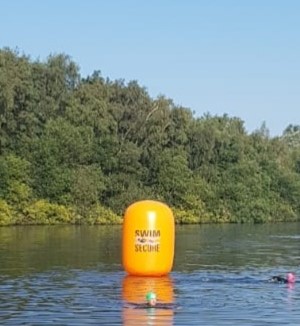
Me in the green hat

I put this to the test regularly. This year it was by taking on open water swimming. Not may be incredibly challenging to some, but for me several beliefs and truths caused me to avoid this.

Firstly, I can swim but I am not great at it. Mostly restricted to holidays (not much chance of those in 2020/2021) and swimming pools with easy access to the edged. Secondly, I hate the cold! I am a hot bath and hot shower person. I have a condition that means my hands and feet get really cold, quickly. Surely cold swimming will only make this worse? Thirdly, I cannot see the bottom. What if I get caught up in weeds or a big pike wants to bite me?

Test and learn

I was given a wet suit and so felt this was the signal to put all that to the test. I have been going now, weekly since June 2021. What have I learnt?

  • Getting bitten is extremely unlikely (not something I have experienced anyway).
  • Weed is just weed, feels a bit odd but that all. It does not pull me under!
  • I am still nervous of the cold, I now have swim gloves and socks.
  • The cold is not so bad, you get used to it and ‘warm up’ quite quickly. I balance my time in the water with its temperature, breathe calmly and do not swim off too fast.
  • My cold hands and feet have not got any worse.
  • The distance between the buoys mean that I can hold on if needed. And there is always a canoeing guard around. I am as safe as I can be.
  • I can now swim further.
  • I gain a deep sense of peacefulness; the ducks are at eye view, and it is even pleasant in the rain.
  • I can problem solve with-out meaning too and I come out tired but calm and satisfied.
  • I have overcome vanity with the horrendous and compulsory swimming hat (I’m in the green hat)!

You will have heard about the many benefits of cold swimming for stress. Being a leadership and neuroscience coach pushed me to check this out for myself.  I also knew that by facing a fear I was building my mental resilience for other challenges.

What else can be learnt?

You can learn to accept and adapt to the physiological state that that situations can create. Your body generates signals to alert you. They can be uncomfortable, your heart races, you can feel sick, cold, hot or shake. Resilience and mental strength come from noticing these and managing them rather than they managing you.

Five Ideas to move you through challenges

  • Check out your assumptions and beliefs about situations that to you are daunting, are they realistic?
  • Talk to, tune into or read about others who have done ‘this’ already, gaining new perspectives and tips
  • Stop listening to scare monger’s, or the over confident
  • See feelings as signals that something is different and needs your attention. Not as a signal that something that matters to you is definitely at risk
  • Seek a coach, mentor, trusted friend or cheerleader for feedback, support and encouragement

And the benefits of building resilience for an aging brain?

Having new experiences or surprises causes you to become very conscious and alert. This starts new synaptic activity in your brain. It makes new neural connections. The saying ‘if you don’t use it, you lose it’ rings true here. Doing things differently, or for the first time, avoiding unnecessary routines, keeps your brains sparking. You are nurturing and creating synaptic re-routes!

Resilience has many components and varies from person to person

Optimism levels play a part. As does openness to failure, there is always something to learn. We cannot always know the impact of our genes on how our brains age, and our environments have influence too. You can influence how your brain ages. How? Through your lifestyle choices and by testing yourself when opportunity allows.

I mentioned I am a leadership and neuroscience coach, does any of this apply to leading?

Certainly, As a leader if you have occasions of: overwhelm, self-doubt, indecision or are avoiding situations. I can help you face them and learn from them … you know where I am.

Dominique is an Alumni of the Neuroscience Academy – certified in Applied Neuroscience and Brain Health

Filed Under: DS Consulting, Neuroscience, Resiliance Tagged With: Coaching, Leadership, Neuroscience, Resilience

  • Page 1
  • Page 2
  • Go to Next Page »

Primary Sidebar

Categories

  • Client Testimonials
  • CMPP
  • Coaching
  • DS Consulting
  • Head 4 Leadership
  • Leadership & Development
  • My news
  • Neuroscience
  • Reflections
  • Resiliance
  • Resilience
  • Special Offer
  • Workshop
  • Your career

Archives

  • May 2025
  • March 2025
  • February 2025
  • November 2024
  • September 2024
  • August 2024
  • June 2024
  • May 2024
  • March 2024
  • January 2024
  • October 2023
  • August 2023
  • July 2023
  • June 2023
  • May 2023
  • March 2023
  • February 2023
  • November 2022
  • August 2022
  • July 2022
  • April 2022
  • February 2022
  • December 2021
  • November 2021
  • October 2021
  • August 2021
  • June 2021
  • May 2021
  • April 2021
  • March 2021
  • February 2021
  • December 2020
  • November 2020
  • October 2020
  • September 2020
  • May 2020
  • April 2020
  • March 2020
  • February 2020
  • January 2020
  • December 2019
  • October 2019
  • September 2019
  • August 2019
  • June 2019

Follow ​Dominique

  • E-mail
  • Facebook
  • Instagram
  • LinkedIn
  • Phone
  • Twitter
  • Home
  • About
  • Coaching Services
  • Event speaker
  • News & blog
  • Contact

© Head4Leadership–2026