• Skip to primary navigation
  • Skip to main content
  • Skip to primary sidebar

Head4Leadership HomepageHead4Leadership

Leadership and Neuroscience Coach

Email: dominique@head4leadership.co.uk
Call: 07703 564451

  • Home
  • About
    • Working with Head 4 Leadership
    • Knowledge and experience
    • Testimonials – What people say
  • Coaching Services
    • Heads Together – Leadership development workshops
  • Event speaker
  • News & blog
  • Contact

#Neuroscience

13th May 2025

Have you ever watched the saddest news item, and it’s had zero emotional impact?

Ways leaders can manage stress so they retain empathy.

The most caring leaders at times, lose empathy?
The reason behind that is good to understand, especially for leaders and those in situations of trust. Because, when your empathy is low you are being self protective (rightly of wrongly). Not good if you want people to be able to open up to you!

What happens when your empathy levels are low? The team you lead and your peers receive little patience, a surprising tone and dismissiveness; and as a result you can make poor decisions and damage to relationships. And, once your mood has levelled out, you feel bad and unprofessional about how you have behaved..

The reasons leaders (and your team) find their empathy has been reduced:
☹️ Negative stress, where the cortisol and adrenalin are running high through a situation that you or they deem to be threatening to them in some way … E.g. Something you are not confident or competent at what is being asked of you.


😴 Self-care stress, where you brain needs your body to be refuelled and resourced. We’ve probably all had ‘hangry’ moments (I am terrible for this). You are hungry, thirsty or super tired and that becomes your sole focus. You are driven to fulfil that physical need, rush what you are doing and don’t pay full attention to what is being asked of you.


😤 Frustration stress, where for example, you cannot see a way out or know how to help. Such as political situations, natural disasters, those sad news stories; and juggling work and social commitments.

Contact me now

Some solutions
You’ve likely picked up on one solution already. 🗣 TAKE CARE OF YOUR PHYSICAL NEEDS.
A bit like put your own oxygen mask on first. Not just for your physical wellbeing but for your psychological processing too. No vehicles run on empty. And neither do humans. Eat, drink water, sleep and move (outdoors preferably), regularly and not in excess.

Another solution, notice the impact on you state as a result of what you are watching, reading, listening to and the company you keep. If, those things are not making you feel positive, optimistic or hopeful, take a break from it or them.


Stress, when managed well, is useful, productive and can include empathy: Stress, in the right circumstances, builds mental strength and tolerance.

The cortisol and adrenalin release that comes as a result of challenging situations, can help with your focus and attention.
Your tolerance for stress can be positively impacted (and empathy levels maintained) when:
🫶 You are supported, (with the required tools, knowledge and people on your side) in what is required of you and,
⏲️ When the duration of the pressure has a known end or break. Allowing a period for recouperation and rest.
Example:
Consider a surgeon. They need to be focused when operating, much can be at stake. That need for attention and focus generally has an expected timescale that enables their tolerance for the challenge. They have a trained team, who know their role and also have a timed requirement for intense focus.

In summary:
1. Manage your empathy levels by caring for your bodies needs.
2. Encourage the same of your team, and co-create the environment for this.
3. Ensure resources, support and focus have a manageable duration attached to them, with breaks built in.

Call or email for coaching to build resilience and empathy
hashtag#leadership hashtag#coaching hashtag#neuroscience hashtag#resilienc

Contact me now

Filed Under: Leadership & Development, Neuroscience, Resilience Tagged With: #Coaching, #Leadership, #managementdevelopment, #Neuroscience, Resilience

17th September 2024

Risk averse to reckless, what’s at stake and for whom?

‘The possibility of something bad happening’

My August newsletter explores risk. One’s relationship with it, how this changes and the impact of your risk levels on those you lead.

It includes links:

  • A personal risk story
  • A check-in with how you would risk assess that story
  • Insights into what is happening in the brain
  • A link to a video about motivation
  • Links to enquire into Head 4 Leaderships services
Ask me about coaching

Filed Under: Coaching, Head 4 Leadership, Leadership & Development, My news, Neuroscience, Reflections, Resilience Tagged With: #Coaching, #Leadership, #managementdevelopment, #Neuroscience, Resilience

24th June 2024

Are you open to challenging your beliefs?

One articles in this months newsletter invites you to ask yourself four questions to inquire into the truth of your beliefs.

I was introduced to these questions earlier in the year and to ‘The work’ of Byron Katie. Coaches need coaches and these questions have helped me to question my perceptions and as necessary, update them.

Click here to read on

Leaders can’t and don’t always get it right

Read about ‘Sam’ whose use of language meant he took on far more than his own responsibilities.

The coaching that he embraced gave him heightened awareness and consciousness of the words he was using. It had a big impact on his team’s performance, focus and motivation. The newsletter contains a focus for using the right pronoun at the right time.

Enquire here – H4L’s coaching services

Subscribe to H4L’s Newletter here

Filed Under: Head 4 Leadership, Leadership & Development Tagged With: #Coaching, #Leadership, #managementdevelopment, #Neuroscience, #neuroscience #coaching #confidence, Resilience

26th February 2023

Is being a ‘grown up’ holding you back?

Re-connecting with your ‘inner child’ as a winning strategy in teams.

‘Babies and children are more open because, to survive, they have to learn as much as they can!’

Are you just too adult?

As well as coaching, I love a facilitating team and leadership development events. The word ‘team build’ often has the impact of Marmite! Generating a high degree of dread for what the team might be asked to do! How many people say they ‘hate’ role play? Lots of reasons given, mostly based on the discomfort of performing, or feeling stupid, maybe looking stupid. Very normal ‘adult’ responses. Ones that often increase the older you get. So I ask, is being a grown up, stopping you from growing?

Think back, to the freedom of a favourite childhood game.

Here’s one of mine.

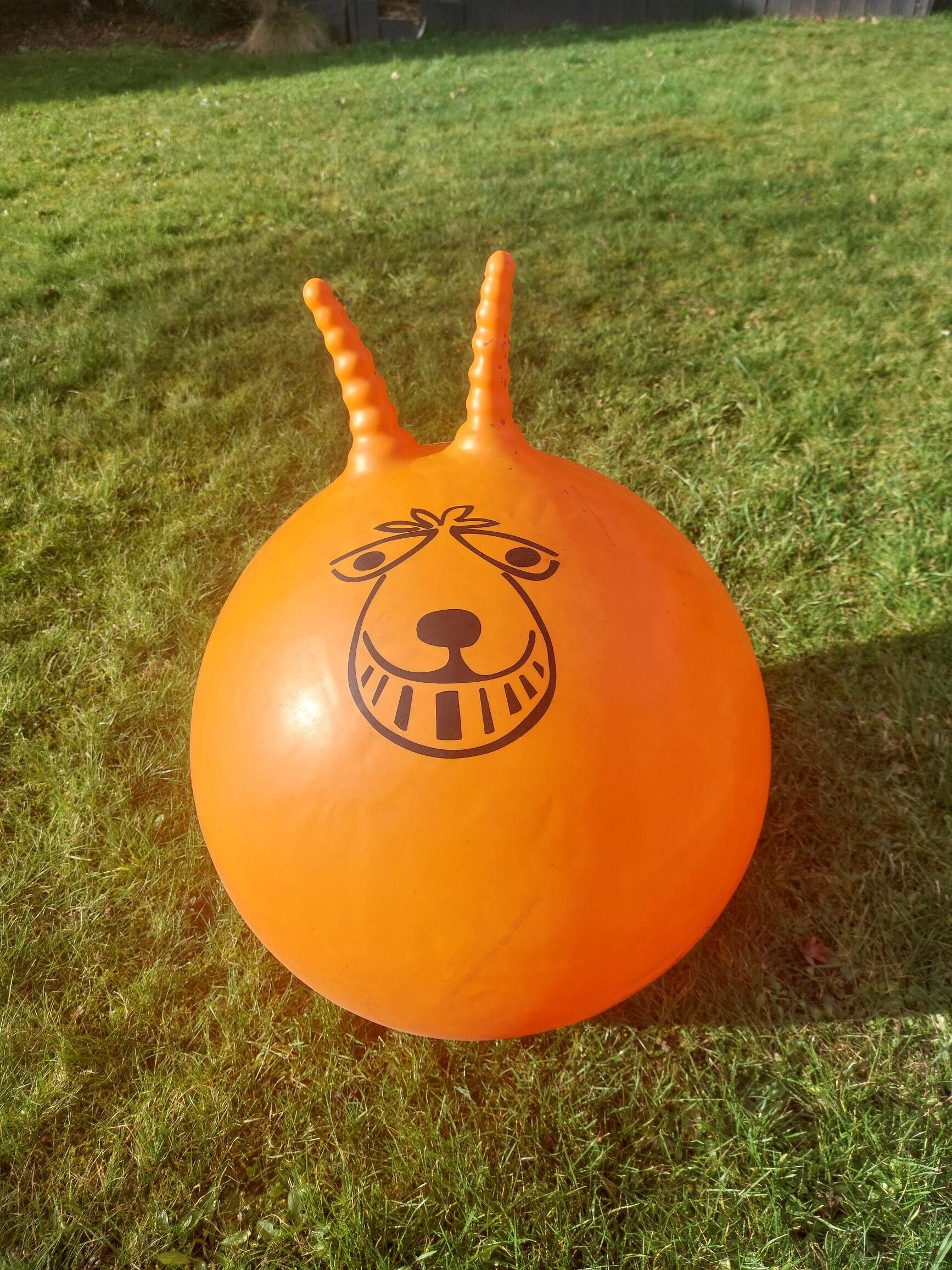
At about eight years old I wanted to be a show jumper, I never had a horse or riding lessons. That didn’t matter. I set up jumps of varying heights using chairs and poles. My brother would help me, and was supposed to time me, score me and commentate (frustratingly, he was only four yrs old). I would do the same for him. My Space Hopper was my horse! A lovely but sometimes stubborn creature that would occasionally refuse a jump! With some gentle encouragement though, my ‘horse’ and I would try again and usually succeed. I loved that game, the whole thing of taking what I had seen on TV and re-enacting it in my garden. I would have hours of fun working out how to create, build and fixing what didn’t work and then trying it out.

The honesty of children at play

Two aspects come to mind here. Firstly the beauty of a child absorbed in a game as they play alone. How they make the noises of cars, trains, light sabres etc., they move with purpose and have animated, blunt conversations with their imaginary characters in imaginary worlds. They have no idea of anything else around them. Mentally processing and rehearsing through play.

Secondly, when children play together. It’s not all roses is it? How often does it involve tears or tantrums? The sensitive stand out as much as the boisterous. They mimic each other, they copy adults, they laugh, they misunderstand, knees get cut, toys get broken, they sulk and yet very often want to do it all over again.

As studies by psychologist Alison Gopnik have shown, young children’s awareness levels are far vaster than an adults. They have a higher levels of neural transmitters activating in their brains in new situations than adults do. Babies and children are more open because to survive, they have to learn as much as they can!

The neurological and psychological impact of play and fun for teams.

The scenarios described above highlight what as adults we can crush; free, unencumbered engagement with ‘what if’ situations and problem solving. Toddlers and young children have the same needs to be accepted, heard, included and valued as adults. What they don’t have, before age of five is a high understanding of the judgement of others and social conformity.

The valuable outcomes of facilitated team activities

  • Stimulates creativity – Imagining and predicting sparks new neural connections. Endorphins, dopamine and serotonin can all be released in ‘playful’ situations.
  • Improves memory and remembering – Active over passive (eg listening to talks) tasks. ‘Doing’ is a more vivid experience, more readily stored and retrieved in our long-term memory.
  • Generates feelings – Providing opportunity to understand and develop emotional intelligence. e.g. Having an adult tantrum, is a misplaced childish trait in the workplace.
  • Enhances social connections and empathy – play, fun, and problem solving tasks can strengthen team bonds. Social connection is a key part in a person’s sense of well-being.

Need a quick ‘play time’ idea for your next team get together?

This can work in person and virtually.

Show the team pictures of 5 random items. E.g., A table lamp, a pen, a hairdryer, a computer mouse and a potato masher. Set a short time and have each team member come up with a brand new, unique use for each one. Take a vote on the favourite transformation.

Interested in a facilitated session with your team? Get in touch today.

Play allows you to see other perspectives, learn with and from others, see what makes others tick, know or test your limits. Play can be equally fun as it can be uncomfortable, yet because it is play it is the best place to work through the discomforts ready for reality.

Filed Under: DS Consulting Tagged With: #Coaching, #Leadership, #Neuroscience, #Wellbeing

14th November 2022

Neuroscience, can it really make a difference to your leadership impact?

Including some key neuroscience principles

Picture from Unsplash – Neuroscience. Artist: Chris Schramm

Setting a scene

I am a leadership and neuroscience coach and about to have a chemistry session – a session to see if a potential client and I are a good match for a coaching relationship.  Not quite an audition, yet, an important time for both parties.  We both want the client’s needs and goals for coaching to be achieved. Rapport being gained in this meeting, is a good sign that we can communicate well together, build trust and progress with the changes being sort.

Meeting a client where they are

On this occasion as we explore what is happening for them and how they think coaching can help, a not uncommon theme arises. 

After many years of hard work, a ‘C’ suite position has been achieved.  How they describe their situation shows the immense pressure they are putting on themselves to be ‘immediately outstanding’. 

They see their role as one where they should be able to do it all, have an answer or solution to everything. The reality of all the ‘new’ and ‘unknowns’ has delivered a surprisingly high dose of vulnerability, self-doubt and uncertainty. 

Get in touch

How neuroscience can help

Neuroscience plays a significant part in how I coach. 

I have studied it (and continue to) over the last 5 years and apply neuroscience to my 20 years of leadership coaching. What does that actually mean?  What do my certifications in neuroscience allow me to draw on? 

  • It helps me reveal to my clients how their way of thinking and behaving has evolved. 
  • It gives insight into how your brain has perceived your experiences.
  • It enhances your self-awareness and consciousness to make change where, when and as it’s needed.
  • It puts neuroscience in to simple, usable format

A few principle of neuroscience

There are a few principles of neuroscience that are incorporated along with the usual skills for my coaching (listening, asking questions, being non-judgements, giving feedback etc) and my years of leadership experience.  Below are some of these ‘high-level principles’ (thank you, Dr Sarah McKay) showing some of what I am considering as I help you find deeper self-awareness and focus for change.

Some principles of neuroscience:

  1. Your brain is shaped by both genetics and the environments you have experienced and this influences your behaviour.
  2. Much of the brain is not hard wired. These ‘plastic’ network areas are growing and shrinking daily in response to your experiences.
  3. You rely on your memories to remember the past, understand the present and predict the future.  Like Chinese whispers recalling the past cannot be relied upon as accurate an reflection. 
  4. Emotions are an interrelated neural process to memory formation and retrieval. 
  5. Your relationships have been crucial to your ability to make positive change.  Belonging and being valued is part of your brain’s innate strategy for survival.
  6. Imagining, pretending, visualising for your brain is similar to actually doing.  Imagining activates the same brain regions as the actual behaviour and can speed up your learning experiences. 
  7. Your brain does many things without you being consciously aware of them. This includes how you respond unconsciously through thoughts feelings and actions.
Get in touch

Back to the chemistry session

The example above, gives an opportunity to explore the clients relationship with vulnerability, perfection and what is driving their behaviour. these neuroscience principles above help with understanding, perspective and opportunities for change.

Point five relates to relationships and I believe it to be the most significant to successful coaching partnerships.  There have been times when a client’s relationship history has been challenging, causing openness to be very testing.

In this chemistry session example, by being able to connect the concerns of this client to some specific aspects of neuroscience it helped them decide that working together was a going to benefit them.

Want to work with me?

I most often work with Execs, business owners, senior leaders and new managers. With the people aspect in mind, I also support psychologically impactful change initiatives (mergers, system changes, restructures).  I provide coaching, leadership and management development and other skills to aid workplace success, transitions and results.

Get in touch

Filed Under: DS Consulting Tagged With: #Coaching, #Leadership, #Neuroscience

  • Page 1
  • Page 2
  • Go to Next Page »

Primary Sidebar

Categories

  • Client Testimonials
  • CMPP
  • Coaching
  • DS Consulting
  • Head 4 Leadership
  • Leadership & Development
  • My news
  • Neuroscience
  • Reflections
  • Resiliance
  • Resilience
  • Special Offer
  • Workshop
  • Your career

Archives

  • May 2025
  • March 2025
  • February 2025
  • November 2024
  • September 2024
  • August 2024
  • June 2024
  • May 2024
  • March 2024
  • January 2024
  • October 2023
  • August 2023
  • July 2023
  • June 2023
  • May 2023
  • March 2023
  • February 2023
  • November 2022
  • August 2022
  • July 2022
  • April 2022
  • February 2022
  • December 2021
  • November 2021
  • October 2021
  • August 2021
  • June 2021
  • May 2021
  • April 2021
  • March 2021
  • February 2021
  • December 2020
  • November 2020
  • October 2020
  • September 2020
  • May 2020
  • April 2020
  • March 2020
  • February 2020
  • January 2020
  • December 2019
  • October 2019
  • September 2019
  • August 2019
  • June 2019

Follow ​Dominique

  • E-mail
  • Facebook
  • Instagram
  • LinkedIn
  • Phone
  • Twitter
  • Home
  • About
  • Coaching Services
  • Event speaker
  • News & blog
  • Contact

© Head4Leadership–2025