• Skip to primary navigation
  • Skip to main content
  • Skip to primary sidebar

Head4Leadership HomepageHead4Leadership

Leadership and Neuroscience Coach

Email: dominique@head4leadership.co.uk
Call: 07703 564451

  • Home
  • About
    • Working with Head 4 Leadership
    • Knowledge and experience
    • Testimonials – What people say
  • Coaching Services
    • Heads Together – Leadership development workshops
  • Event speaker
  • News & blog
  • Contact

Leadership

12th March 2025

You thought you were on the same page! Only to find you weren’t!

Ever had that sinking feeling when you check-in with the team or an individual and find the work is below your expectations?

It can be that they are: completely off track, behind schedule, missing key people’s input, incorrect details, off message or poor quality, for example.

The frustration for leaders and managers this causes, is understandable, yet I believe the responsibility for .how communications are received sits with the leader. Communicating has many levels and methods; and mastery of this multifaceted skills is, in my mind, on going. Requiring reflection to enable improvement.

Three easy traps to failed communication (spoken or written)

🗣 Thinking that ‘telling’, and receiving nods and yes’s in response, equals message understood. 
To clients who say they thought someone else knew what they meant… I say – you thought they did, how about knowing they did?

🚫 Not being clear yourself.
When you ask others to do work without a strong why, and what good looks like.
This, in my opinion, is especially important in regard to a first time task or new responsibilities.
When I ask clients, how does this link to objectives, the strategy or business values?
It’s not infrequent that the answer is vague or needs thinking that hasn’t taken place in advance.

😡 A blame mindset.
Putting the blame on others for a work issue, can be understandable.
Who wants to stand out for errors or mistakes occurring? Owning up to your part comes with levels of discomfort such as shame, embarrassment or guilt. Yet, ego in leadership is something to be managed well, so as not to push those feelings unfairly onto others.
When clients say to me, why didn’t they just ask?  I say, ‘You tell me? How do you make doing that possible and okay?

There is much to master when it comes to communication!

Communication is a massive subject. Subjective, situational, emotional and requires, from my perspective, high levels of compassion and courage. The difference communication work has made to me and clients is incredible. It builds clarity, trust and psychological safety for all parties

Message me

MESSAGE ME and we can work on this skill together!

Filed Under: Coaching Tagged With: Communication, emotional intelligence, Leadership, perspective

26th October 2021

How are you building your resilience?

Representation of a neuron firing

In this post I explain and provide five ideas

Resilience and mental strength are not simply great for increasing your confidence and self-belief, they also help your brain as it ages.

A big statement, though it is not a guarantee that you can undo or stop a brain from aging. What it does say is, that the more resilient you are to the challenges you face, the stronger you make your brain. Brain activity that helps you through real or perceived challenges will also help as parts of your brain age.

An example.

A recent client described how though they had passed their driving test they would not go on motor ways. Their lack of knowledge and experience caused them to ‘believe’ they were not equipped to deal with a motorway problem or emergency. Long journeys to family members were prolonged through non motorway routing. This may have continued if an especially long journey were not on the horizon. A three-hour route via the motorway becomes a five-hour trawl through ‘A’ roads, country lanes, town centres and dual carriage ways. Pushed by the desire to make this important visit and a trusted friend they made the trip. They are now confident to drive regularly on motorways.

What has happened in the brain?

The brain works to move you through life. It uses past events including associated emotional responses and the memory of the physiological state. All this is drawn on when you are faced with something new. The problem is you can be limited by these reference points. They may no longer be valid and lead you to poorly informed choices. By facing a challenge or new experience like driving for the first time on a motorway, you expand your reference points, and can update past beliefs.

The more experiences you have and the more you challenge your beliefs and assumptions, the more resilient you become.

Me in the green hat

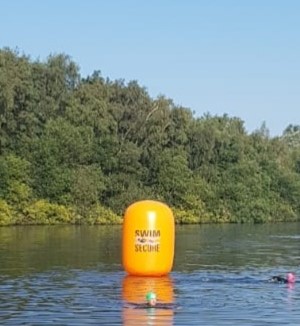
I put this to the test regularly. This year it was by taking on open water swimming. Not may be incredibly challenging to some, but for me several beliefs and truths caused me to avoid this.

Firstly, I can swim but I am not great at it. Mostly restricted to holidays (not much chance of those in 2020/2021) and swimming pools with easy access to the edged. Secondly, I hate the cold! I am a hot bath and hot shower person. I have a condition that means my hands and feet get really cold, quickly. Surely cold swimming will only make this worse? Thirdly, I cannot see the bottom. What if I get caught up in weeds or a big pike wants to bite me?

Test and learn

I was given a wet suit and so felt this was the signal to put all that to the test. I have been going now, weekly since June 2021. What have I learnt?

  • Getting bitten is extremely unlikely (not something I have experienced anyway).
  • Weed is just weed, feels a bit odd but that all. It does not pull me under!
  • I am still nervous of the cold, I now have swim gloves and socks.
  • The cold is not so bad, you get used to it and ‘warm up’ quite quickly. I balance my time in the water with its temperature, breathe calmly and do not swim off too fast.
  • My cold hands and feet have not got any worse.
  • The distance between the buoys mean that I can hold on if needed. And there is always a canoeing guard around. I am as safe as I can be.
  • I can now swim further.
  • I gain a deep sense of peacefulness; the ducks are at eye view, and it is even pleasant in the rain.
  • I can problem solve with-out meaning too and I come out tired but calm and satisfied.
  • I have overcome vanity with the horrendous and compulsory swimming hat (I’m in the green hat)!

You will have heard about the many benefits of cold swimming for stress. Being a leadership and neuroscience coach pushed me to check this out for myself.  I also knew that by facing a fear I was building my mental resilience for other challenges.

What else can be learnt?

You can learn to accept and adapt to the physiological state that that situations can create. Your body generates signals to alert you. They can be uncomfortable, your heart races, you can feel sick, cold, hot or shake. Resilience and mental strength come from noticing these and managing them rather than they managing you.

Five Ideas to move you through challenges

  • Check out your assumptions and beliefs about situations that to you are daunting, are they realistic?
  • Talk to, tune into or read about others who have done ‘this’ already, gaining new perspectives and tips
  • Stop listening to scare monger’s, or the over confident
  • See feelings as signals that something is different and needs your attention. Not as a signal that something that matters to you is definitely at risk
  • Seek a coach, mentor, trusted friend or cheerleader for feedback, support and encouragement

And the benefits of building resilience for an aging brain?

Having new experiences or surprises causes you to become very conscious and alert. This starts new synaptic activity in your brain. It makes new neural connections. The saying ‘if you don’t use it, you lose it’ rings true here. Doing things differently, or for the first time, avoiding unnecessary routines, keeps your brains sparking. You are nurturing and creating synaptic re-routes!

Resilience has many components and varies from person to person

Optimism levels play a part. As does openness to failure, there is always something to learn. We cannot always know the impact of our genes on how our brains age, and our environments have influence too. You can influence how your brain ages. How? Through your lifestyle choices and by testing yourself when opportunity allows.

I mentioned I am a leadership and neuroscience coach, does any of this apply to leading?

Certainly, As a leader if you have occasions of: overwhelm, self-doubt, indecision or are avoiding situations. I can help you face them and learn from them … you know where I am.

Dominique is an Alumni of the Neuroscience Academy – certified in Applied Neuroscience and Brain Health

Filed Under: DS Consulting, Neuroscience, Resiliance Tagged With: Coaching, Leadership, Neuroscience, Resilience

Primary Sidebar

Categories

  • Client Testimonials
  • CMPP
  • Coaching
  • DS Consulting
  • Head 4 Leadership
  • Leadership & Development
  • My news
  • Neuroscience
  • Reflections
  • Resiliance
  • Resilience
  • Special Offer
  • Workshop
  • Your career

Archives

  • May 2025
  • March 2025
  • February 2025
  • November 2024
  • September 2024
  • August 2024
  • June 2024
  • May 2024
  • March 2024
  • January 2024
  • October 2023
  • August 2023
  • July 2023
  • June 2023
  • May 2023
  • March 2023
  • February 2023
  • November 2022
  • August 2022
  • July 2022
  • April 2022
  • February 2022
  • December 2021
  • November 2021
  • October 2021
  • August 2021
  • June 2021
  • May 2021
  • April 2021
  • March 2021
  • February 2021
  • December 2020
  • November 2020
  • October 2020
  • September 2020
  • May 2020
  • April 2020
  • March 2020
  • February 2020
  • January 2020
  • December 2019
  • October 2019
  • September 2019
  • August 2019
  • June 2019

Follow ​Dominique

  • E-mail
  • Facebook
  • Instagram
  • LinkedIn
  • Phone
  • Twitter
  • Home
  • About
  • Coaching Services
  • Event speaker
  • News & blog
  • Contact

© Head4Leadership–2025