
• Skip to primary navigation
  • Skip to main content
  • Skip to primary sidebar

Head4Leadership HomepageHead4Leadership

Leadership and Neuroscience Coach

Email: dominique@head4leadership.co.uk
Call: 07703 564451

  • Home
  • About
    • Working with Head 4 Leadership
    • Knowledge and experience
    • Testimonials – What people say
  • Coaching Services
    • Heads Together – Leadership development workshops
  • The Authentic Leader Book
  • Event speaker
  • News & blog
  • Contact

Dominique Stillman

26th October 2021

How are you building your resilience?

Representation of a neuron firing

In this post I explain and provide five ideas

Resilience and mental strength are not simply great for increasing your confidence and self-belief, they also help your brain as it ages.

A big statement, though it is not a guarantee that you can undo or stop a brain from aging. What it does say is, that the more resilient you are to the challenges you face, the stronger you make your brain. Brain activity that helps you through real or perceived challenges will also help as parts of your brain age.

An example.

A recent client described how though they had passed their driving test they would not go on motor ways. Their lack of knowledge and experience caused them to ‘believe’ they were not equipped to deal with a motorway problem or emergency. Long journeys to family members were prolonged through non motorway routing. This may have continued if an especially long journey were not on the horizon. A three-hour route via the motorway becomes a five-hour trawl through ‘A’ roads, country lanes, town centres and dual carriage ways. Pushed by the desire to make this important visit and a trusted friend they made the trip. They are now confident to drive regularly on motorways.

What has happened in the brain?

The brain works to move you through life. It uses past events including associated emotional responses and the memory of the physiological state. All this is drawn on when you are faced with something new. The problem is you can be limited by these reference points. They may no longer be valid and lead you to poorly informed choices. By facing a challenge or new experience like driving for the first time on a motorway, you expand your reference points, and can update past beliefs.

The more experiences you have and the more you challenge your beliefs and assumptions, the more resilient you become.
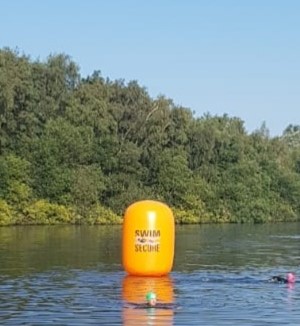
Me in the green hat

I put this to the test regularly. This year it was by taking on open water swimming. Not may be incredibly challenging to some, but for me several beliefs and truths caused me to avoid this.

Firstly, I can swim but I am not great at it. Mostly restricted to holidays (not much chance of those in 2020/2021) and swimming pools with easy access to the edged. Secondly, I hate the cold! I am a hot bath and hot shower person. I have a condition that means my hands and feet get really cold, quickly. Surely cold swimming will only make this worse? Thirdly, I cannot see the bottom. What if I get caught up in weeds or a big pike wants to bite me?

Test and learn

I was given a wet suit and so felt this was the signal to put all that to the test. I have been going now, weekly since June 2021. What have I learnt?

  • Getting bitten is extremely unlikely (not something I have experienced anyway).
  • Weed is just weed, feels a bit odd but that all. It does not pull me under!
  • I am still nervous of the cold, I now have swim gloves and socks.
  • The cold is not so bad, you get used to it and ‘warm up’ quite quickly. I balance my time in the water with its temperature, breathe calmly and do not swim off too fast.
  • My cold hands and feet have not got any worse.
  • The distance between the buoys mean that I can hold on if needed. And there is always a canoeing guard around. I am as safe as I can be.
  • I can now swim further.
  • I gain a deep sense of peacefulness; the ducks are at eye view, and it is even pleasant in the rain.
  • I can problem solve with-out meaning too and I come out tired but calm and satisfied.
  • I have overcome vanity with the horrendous and compulsory swimming hat (I’m in the green hat)!

You will have heard about the many benefits of cold swimming for stress. Being a leadership and neuroscience coach pushed me to check this out for myself.  I also knew that by facing a fear I was building my mental resilience for other challenges.

What else can be learnt?

You can learn to accept and adapt to the physiological state that that situations can create. Your body generates signals to alert you. They can be uncomfortable, your heart races, you can feel sick, cold, hot or shake. Resilience and mental strength come from noticing these and managing them rather than they managing you.

Five Ideas to move you through challenges

  • Check out your assumptions and beliefs about situations that to you are daunting, are they realistic?
  • Talk to, tune into or read about others who have done ‘this’ already, gaining new perspectives and tips
  • Stop listening to scare monger’s, or the over confident
  • See feelings as signals that something is different and needs your attention. Not as a signal that something that matters to you is definitely at risk
  • Seek a coach, mentor, trusted friend or cheerleader for feedback, support and encouragement

And the benefits of building resilience for an aging brain?

Having new experiences or surprises causes you to become very conscious and alert. This starts new synaptic activity in your brain. It makes new neural connections. The saying ‘if you don’t use it, you lose it’ rings true here. Doing things differently, or for the first time, avoiding unnecessary routines, keeps your brains sparking. You are nurturing and creating synaptic re-routes!

Resilience has many components and varies from person to person

Optimism levels play a part. As does openness to failure, there is always something to learn. We cannot always know the impact of our genes on how our brains age, and our environments have influence too. You can influence how your brain ages. How? Through your lifestyle choices and by testing yourself when opportunity allows.

I mentioned I am a leadership and neuroscience coach, does any of this apply to leading?

Certainly, As a leader if you have occasions of: overwhelm, self-doubt, indecision or are avoiding situations. I can help you face them and learn from them … you know where I am.

Dominique is an Alumni of the Neuroscience Academy – certified in Applied Neuroscience and Brain Health

Filed Under: DS Consulting, Neuroscience, Resiliance Tagged With: Coaching, Leadership, Neuroscience, Resilience

20th August 2021

The power of reflection in building a stronger more resilient future.

By nature, I am a forward-looking person, excited by the future, new opportunities and experiences. What reflection does is help me acknowledge all the stuff I’d forgotten I’d had done. I know from these periods of reflection that I get nice surprises, rude awakenings and both deserve a bit of focus!

Recently I was preparing for a business pitch and thinking about the client’s circumstances and how I could best help them.  I love my work and the purpose that drives me, which is honest and compassionate leadership.  Leaders who create psychologically safe spaces and cultures for everyone to thrive are great leaders.  Just loving your work though often isn’t good enough…

A time for reflection
Find time in business for reflection.

Time for reflection. 

This brings me to reflection time. Not only does reflecting help you become more aware of what you have been doing, it also draws your attention to the effort, energy and impact to make it happen.  Self-reflection has its place and yet it may create a flawed impression of reality.  Personalities have default lenses.  Lenses that might focus on positives over negatives and vice-versa. That is why it is important to sense check with trusted others, to challenge versions of events that occur in the workplace.

When I’m coaching, reflection time is a big part of the session-to-session process.  It’s not unusual for clients to ‘brush off’ what they have done, to chastise themselves for their progress (or lack of it).  Others may be delighted with their efforts, and not see that an opportunity has been missed. A full reflection of ‘what, how and why’ can make a big difference the next time a similar situation occurs.

It’s all about memory.

We rely on our memories to guide us in life.  We use what we recall in terms of actions and felt emotions to steer our responses in the future.  Analysing our activities allows us to re-assess how we have recorded the memory and if needed, adjust it.

A case study in reflection.

A client had a staff member, on probation who wasn’t performing well enough.  My client believes in giving everyone a chance, in fact numerous chances.  Some gentle conversations on attendance standards were had, with reassurances from the staff member that they would be addressed and there was no reason for them not to be.  But they were still late, or ‘decided’ unilaterally to work from home on a day when they were meant to be in the office.  My own thoughts on the matter were: If this happens on probation, what does it say about the individual’s commitment to the role? 

My client, with some guidance, took the big step. They told the staff member they were not going to pass their probation. Our reflection time revealed and explored the ‘pain’ of having to do this, of wishing that they could have ‘saved’ this person, of having so much ‘hope for their potential’ and how they felt they had failed. 

Now, you can leave it there or you can re-evaluate the experience and add it to the memory. The learning, opportunity and broader impact of the actions taken. In doing so my client now has a memory to draw on that acknowledges the emotions experienced. But they also see that as a result of the decision, there have been many benefits for the wider team, their reputation and their understanding of where taking individual responsibility for actions sits. 

Reflecting can build confidence and resilience.

Reflection that resets memories to include learnings is a tool to build courage for future challenges.  Leaders who are honest and compassionate can help create a culture that allows for safe reflection and personal growth. To understand more about effective leadership and building resilience based on past experiences, contact me today.

Filed Under: DS Consulting

21st June 2021

New Client Testimonial

Tracy Jarvis, CEO, Community Matters Partnership Project (CMPP).

“As the leader of a multifaceted charity with many stakeholders, I am faced with difficult challenges on a day-to-day basis. When the COVID pandemic hit and the crisis forced us to halt all activities including fund-raising events, I found my job very difficult and I felt under extreme pressure. I wasn’t sure how I was going to keep people employed to do the important work they were doing. My thinking at this point became unclear with so many pressing priorities and challenges to overcome, alongside a variety of opinions on what direction we should take.

I decided to reach out to Dominique at this point, to see if she was able to help me regain some clarity and confidence lost over an unsure and turbulent period of time for the charity I was leading. I was so thankful that I did. It’s very difficult for leaders to admit when they are struggling. I have never sought any professional coaching and leadership before this point in my career 20-year career and, if I’m honest, I would say I was slightly sceptical of the whole industry surrounding personal coaching. However, I was wrong.

Having gone through a structured program with Dominique, I would highly recommend this experience to any leader. Dominique’s approach is to help you identify and remember your successes whilst supporting you to improve areas of weakness. Undoubtedly the sessions have helped me to put things back into perspective, gain clarity, and ultimately improve my leadership. I would highly recommend Dominique and her program to anyone looking to improve their leadership skills and mental robustness.”

Filed Under: Client Testimonials

18th May 2021

How small talk makes a big impact in the workplace

One of the interesting things about working in leadership is how it is perceived as a BIG subject.  Ask 10 people what leadership means, you’ll most likely get nine different answers.

Leadership can cast a long shadow and make some people think, ‘I can’t lead’. Conversely, and I’ve seen this, there are leaders who think they can lead, but can’t! Working in leadership I understand the elements that go to make good managers. What’s interesting is how small elements can really go a long way.

Small talk is actually big talk.

What many leaders want to do (but find hard), is to connect and build trust with their team. Team members themselves tend to value direction, being seen as an individual and receiving compassionate support. A good way for relationships to be forged and connections achieved is through daily small talk.

Small talk, though dreaded by some, helps to build trust between a manager and a team member. Small talks can create a safe environment for people to be able to express themselves, without fear, in the workplace. Here are some examples of what small talk ‘in action’ is about:

  • Learning about family, interests, hobbies, past achievements, work roles and future hopes and aspirations.
  • Shining-a-light on areas of common interest e.g. football, holidays or music.
  • Linking small talk moments. What’s been happening since I last saw you? How did your son/daughter do in their exam?
  • Discovering if there is anything you can help a team member with?

Small talk is also known as check-ins. Check-in with a member of the team and ask how they are. The past year has changed the dynamic of check-ins completely. Leaders have not been able to walk through the office, they have needed to adapt their small talk skills to the virtual environment. In the first lockdown this was a challenge, but it got better as people became more familiar with Zoom etc.  What the past year hasn’t done is take away the positive impact on mood that a small personal conversation can have.

The art of small talk

Face-to-face or not, for small talk to be effective it must be authentic and applied consistently. Small talk is nothing without active listening. The trust piece only grows when the small talk is two way and builds on previous interactions. When applied in this way, the little conversations aggregate and can help grow trust in a BIG way. When you have earned trust and respect in a group environment the potential of what can be achieved together is enormous.

Small talk is one technique to help build effective teams. To discuss improving team performance in your company contact Dominique or call 07703 564451.

Filed Under: Leadership & Development

14th April 2021

New Client Testimonial

I am delighted to have just received this new client testimonial from Stuart Bagnell, the Chief of Culture at lastiminute.com

“Dominique is a talented coach and facilitator. We’ve worked together on several projects, including leadership coaching and development. Most recently our face 2 face group leadership development work has had to go online. These sessions remained inclusive and engaging for all. The content was put together with great thought and consideration of our wider group and individual attendee needs. I also had the pleasure of hosting an internal video interview with Dominique to deep dive into the topic ‘Mental Toughness in Leadership’ which proved to be one of the most-watched videos in the series.” 

Stuart Bagnell

Chief of Culture, lastminute.com

Filed Under: Client Testimonials

  • « Go to Previous Page
  • Page 1
  • Interim pages omitted …
  • Page 5
  • Page 6
  • Page 7
  • Page 8
  • Page 9
  • Interim pages omitted …
  • Page 12
  • Go to Next Page »

Primary Sidebar

Categories

  • Client Testimonials
  • CMPP
  • Coaching
  • DS Consulting
  • Head 4 Leadership
  • Leadership & Development
  • My news
  • Neuroscience
  • Reflections
  • Resiliance
  • Resilience
  • Special Offer
  • Workshop
  • Your career

Archives

  • April 2026
  • May 2025
  • March 2025
  • February 2025
  • November 2024
  • September 2024
  • August 2024
  • June 2024
  • May 2024
  • March 2024
  • January 2024
  • October 2023
  • August 2023
  • July 2023
  • June 2023
  • May 2023
  • March 2023
  • February 2023
  • November 2022
  • August 2022
  • July 2022
  • April 2022
  • February 2022
  • December 2021
  • November 2021
  • October 2021
  • August 2021
  • June 2021
  • May 2021
  • April 2021
  • March 2021
  • February 2021
  • December 2020
  • November 2020
  • October 2020
  • September 2020
  • May 2020
  • April 2020
  • March 2020
  • February 2020
  • January 2020
  • December 2019
  • October 2019
  • September 2019
  • August 2019
  • June 2019

Follow ​Dominique

  • E-mail
  • Facebook
  • Instagram
  • LinkedIn
  • Phone
  • Twitter
  • Home
  • About
  • Coaching Services
  • The Authentic Leader Book
  • Event speaker
  • News & blog
  • Contact

© Head4Leadership–2026

Manage Consent
To provide the best experiences, we use technologies like cookies to store and/or access device information. Consenting to these technologies will allow us to process data such as browsing behaviour or unique IDs on this site. Not consenting or withdrawing consent, may adversely affect certain features and functions.
Functional Always active
The technical storage or access is strictly necessary for the legitimate purpose of enabling the use of a specific service explicitly requested by the subscriber or user, or for the sole purpose of carrying out the transmission of a communication over an electronic communications network.
Preferences
The technical storage or access is necessary for the legitimate purpose of storing preferences that are not requested by the subscriber or user.
Statistics
The technical storage or access that is used exclusively for statistical purposes. The technical storage or access that is used exclusively for anonymous statistical purposes. Without a subpoena, voluntary compliance on the part of your Internet Service Provider, or additional records from a third party, information stored or retrieved for this purpose alone cannot usually be used to identify you.
Marketing
The technical storage or access is required to create user profiles to send advertising, or to track the user on a website or across several websites for similar marketing purposes.
  • Manage options
  • Manage services
  • Manage {vendor_count} vendors
  • Read more about these purposes
View preferences
  • {title}
  • {title}
  • {title}